Harnessing Martial Arts for Women’s Safety and Empowerment
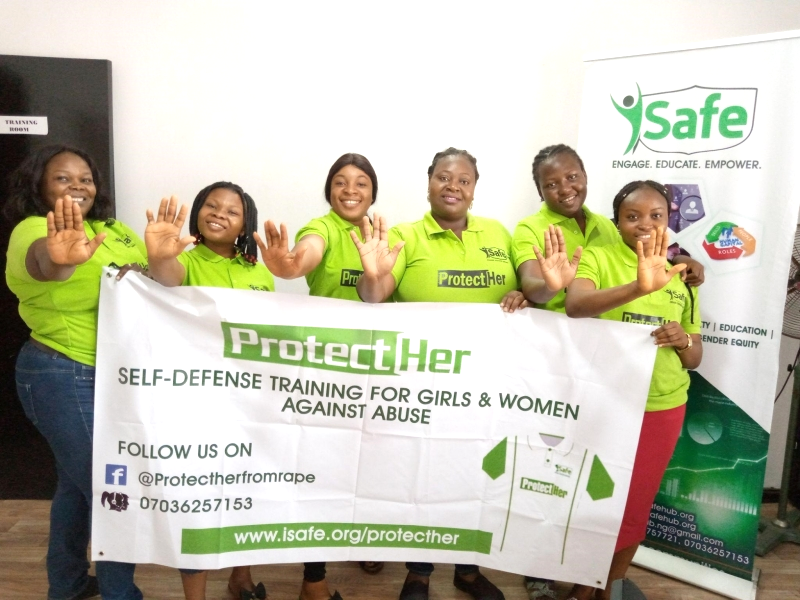
Martial arts is more than a discipline of physical skill; it is a tool for building resilience, courage, and confidence. Across the world, women and girls face vulnerabilities to violence and abuse, often without the means to defend themselves or set boundaries. For iSafe, martial arts are not about fighting, but about equipping women and girls with the confidence to stand firm, to protect themselves when necessary, and to claim safer spaces within their communities. As Elizabeth Cady Stanton once said, “The best protection any woman can have … is courage.” Courage, reinforced by practical self-defense skills, has been the foundation of iSafe’s work in Nigeria since 2019.
Martial arts techniques such as stance control, boundary-setting gestures, release from grips and chokes, and defensive strikes are at the core of iSafe’s training. These skills go beyond physical moves—they teach awareness, assertiveness, and the ability to say “no” with confidence. Such tools are vital in contexts where girls and women are often silenced by fear or social norms. Research has also shown that martial arts increases psychological resilience and reduce fear in women by strengthening confidence and body awareness (World Health Organization, 2021).
From 2019 to 2024, iSafe has made significant strides in using martial arts to create safer communities across Lagos and Ogun States. In Makoko, Lagos State, 30 vulnerable girls aged 9–16 were trained in a four-day self-defense program that combined practical martial arts techniques with discussions on assertive behavior and bravery. The success was evident as girls, previously shy and fearful, began to display confidence and the ability to defend themselves.
In Agbado Oja, Ogun State, a community plagued by early child marriage and sexual abuse, 50 girls were trained in Taekwondo and Israeli Krav Maga in 2020. Among them was Fumilayo, a 14-year-old mother who a much older man had abused. Through iSafe’s program, she gained the skills to set boundaries, rediscovered her confidence, and was relocated to a safer environment where she resumed her education. Her story is a living testimony of resilience, showing how martial arts can restore dignity and hope.
That same year, in Yaba, Lagos, iSafe worked with 20 women aged 18–35, many of whom had endured abuse in homes, workplaces, or public spaces. The training gave them tools not just to defend themselves but to become safety advocates in their communities. One participant, Mercy, who arrived at training with bruises from domestic abuse, completed the program with a renewed sense of safety and empowerment.
In 2021, the reach expanded. Ten volunteers were trained to extend iSafe’s work across Lagos, while 80 adolescent girls in Magboro, Ogun State, received martial arts instruction during a summer boot camp. For girls trapped at home with abusers during COVID-19 lockdowns, the training was a lifeline. Favour, 13, used her new skills to escape an attempted assault on her way home from school. Another, Omolola, just 12, managed to break free from an abuser and found the courage to report him.
The momentum continued in 2022, with workplace-focused training for female employees during International Women’s Day. Women, including expectant mothers, embraced self-defense techniques to boost confidence in male-dominated environments and to navigate domestic challenges at home. That year also saw the training of senior secondary school girls in Lagos, addressing vulnerabilities to harassment and early marriage. Evaluations revealed increased confidence and a better understanding of boundaries.

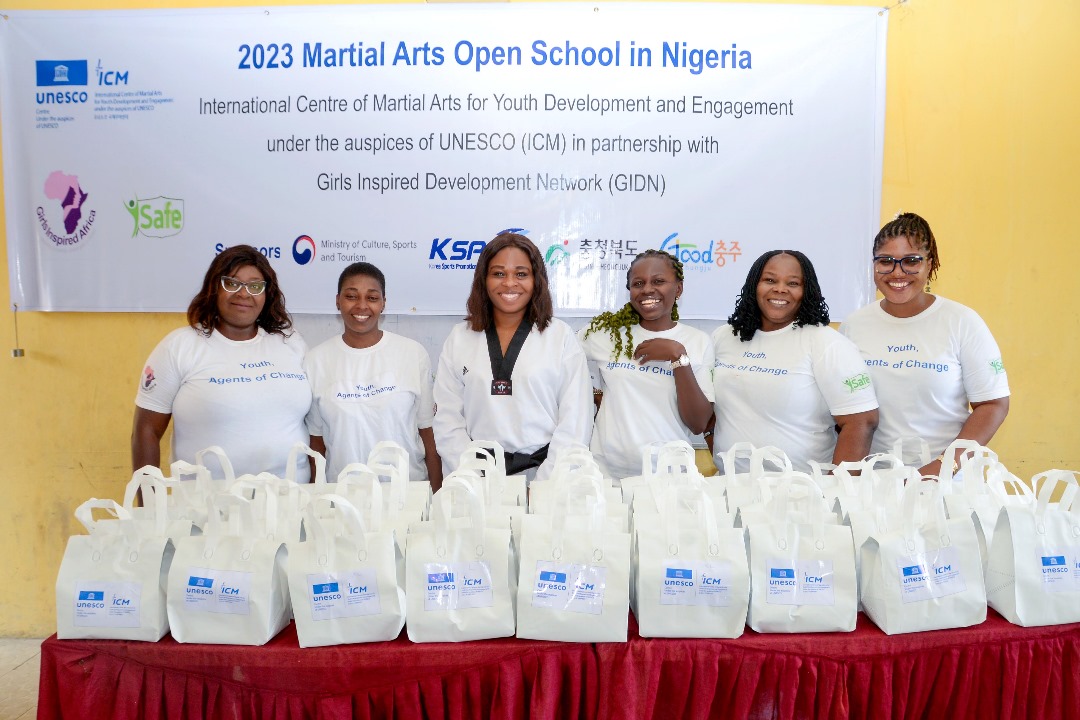
In 2023, a milestone was reached through the Martial Arts Open School in Lagos, a partnership with International Centre of Martial Arts for Youth Development and Engagement under the auspices of UNESCO(ICM) in South Korea. Over 100 girls aged 12–17 were trained in Taekwondo and Krav Maga over two months, covering both physical techniques and theoretical aspects of self-esteem, mental health, and child rights. For many, it was their first introduction to self-defense, and the impact was profound. That same year, iSafe representatives attended the African Women Martial Arts Leaders Workshop organized by ICM, further strengthening their capacity to deliver community-based programs.
In 2024, iSafe deepened its integration of martial arts into broader empowerment initiatives. Women training in male-dominated sectors, such as the gas business, received self-defense lessons to boost their confidence in workplaces often marked by gender discrimination. During Menstrual Hygiene Day, follow-up with Open School participants revealed strong retention of martial arts skills, and additional mentorship on menstrual hygiene was provided alongside training in making eco-friendly reusable pads. Later that year, 100 girls in a Lagos senior secondary school were empowered with self-defense training and mentorship during the International Day of the Girl Child.
Across Lagos and Ogun States, iSafe has directly trained over 1,000 women and girls in martial arts. The results are consistent: increased confidence, assertiveness, physical strength, and resilience. Women and girls not only defend themselves but also serve as advocates for safety and gender equality within their communities. The programs have also contributed to reducing gender bias in workplaces and schools, fostering inclusiveness and healthier community relationships.
As Ban Ki-moon, former UN Secretary-General, affirmed: “When women are safe, free, and empowered, they transform their communities.”
Martial arts have thus proven to be both a shield and a voice. It equips women and girls with skills that protect them in moments of vulnerability, while also instilling a sense of courage and dignity that reshapes their daily lives. iSafe’s work shows that when women are trained, entire communities are transformed.